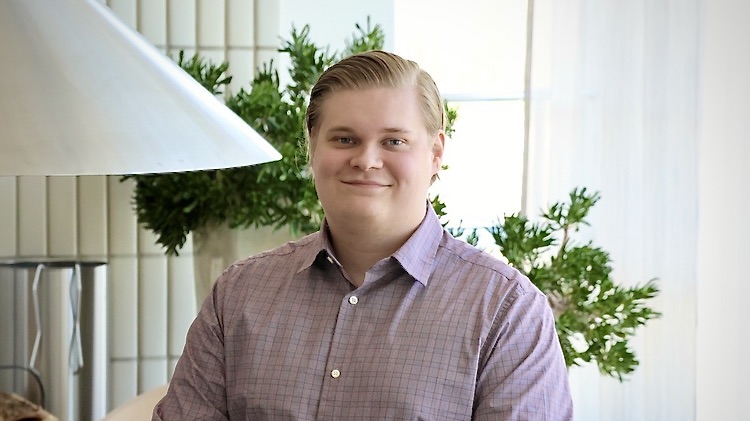
So there I was, nearing the end of my studies, wondering what to do next. My studies in mathematics and computer science had prepared me for many things, but not for this. I had done work in research, and quite liked it, but the call of industry was alluring. I wanted to see how things were done in the real world, outside the comforts of the university where data is messy and algorithms are more than just pseudocode. I wanted to put my studies to good use, so I would have to look for a math-heavy job.
I had worked as a teaching assistant on a course on cryptography and that seemed like the best field to apply myself. This field also had a guiding light drawing me to it. With the threat of quantum computers, the area of Post-Quantum Cryptography (PQC) was very active, both in academia and in the industry. The need for new quantum-secure cryptographic algorithms has led researchers to investigate difficult problems from the theoretical depths of mathematics. Algebraic number theory, information theory, and coding theory? These are all things I have studied. This seemed like the niche for me.
Around this time, I heard of Xiphera. On a whim, I sent them an email. My skills and the company’s needs seemed to align. However, there was a catch. I would have to learn how to program for FPGAs. It took some time and a whole new perspective on programming but eventually I learned it, even enjoyed doing it. After all, studies in mathematics had distilled in me a love for the small details and the nitty-gritty.
Into a professional with a cutting edge work
I started working for Xiphera in the summer of 2022, first as a summer trainee, in the fall as a part-time developer, and after graduation as a full-time cryptographic engineer. At first, I was a little intimidated: I was surrounded by people with a background in electrical engineering with long careers in relevant fields, whereas my know-how was more on the theoretical side. However, my mathematical knowledge proved useful time and time again.
Over time my abilities have grown, along with my confidence in them. I feel like working on the cutting edge has moulded me into a professional. I get to show off my abilities in my everyday work within the company, but also to the outside world – I will be representing Xiphera in the upcoming FPGA Conference Europe in Munich, Germany, on July 4-6, where I will also give a presentation about PQC.
Finally, to all aspiring mathematicians with the slightest inclination towards the industry: I encourage you to try your hand at cryptography, maybe even with Xiphera!